Australians love their dogs. Many of them especially love driving with their dogs in their cars. You may see them with their windows down and their dogs’ faces sticking out of them to breathe the fresh air. Perhaps you even do the same thing when driving in your car as well.
But is it legal? Some Australians are hesitant to drive with their dogs because they don’t know if the law allows them to do it.
The good news is that the Australian government has no laws forbidding people from driving with dogs. But the bad news is that different Australian states and territories have their own set of rules that govern this particular action.
State and Territory Laws for Driving with Dogs
Would you like to learn about the various laws about driving cars with dogs in them? Here is a breakdown of the primary states and territories with these laws:
Australian Capital Territory
The Australian Capital Territory allows you to drive your car while having a dog in it. The only stipulation is that you restrain your dog correctly before moving with them. Section 15A of the Animal Welfare Act 1992 (ACT) requires you to do this. Anyone who breaks this law could face up to 20 penalty units in court.
The purpose of the law is to ensure you and the dog remain safe while you are driving. The government does not want your dog to move around while the car is in motion because they could suffer an injury or cause you to have an accident.
New South Wales
New South Wales allows drivers to have animals in their cars if they are safe from potential harm.
According to the Prevention of Cruelty to Animals 1979 (NSW), the person with authority over an animal can only transport the animal if they will not be subjected to pain or harm during the trip. The legislation describes it as forbidding the carriage of an animal in a manner that “unjustifiably, unnecessarily, or unreasonably inflicts pain upon the animal.”
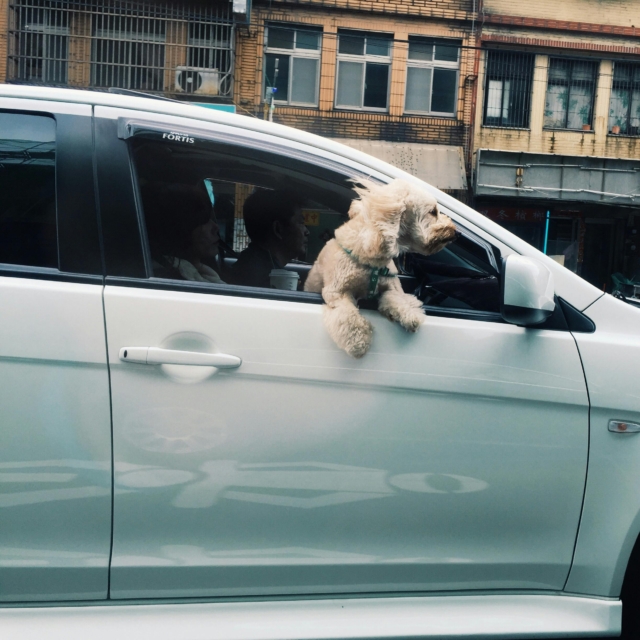
For example, if you let your dog sit on your lap while you drive, it would be a violation of the law because they could suffer a severe injury in case of a sudden stop or accident. You also cannot let your dog sit half their body out an open window due to the potential risk involved there as well.
The maximum penalty for an individual breaking this law is up to 6 months in jail, 50 penalty units, or both. If a corporation violates this law, it could face up to 250 penalty units.
South Australia
South Australia has some more relaxed laws regarding dogs in moving cars. Basically, you are allowed to drive your vehicle with a dog or other animal in it as long as it doesn’t sit or rest on your lap.
The Drivers Handbook of South Australia explicitly states that it is a crime to keep a dog on your lap while you drive a car.
Queensland
Queensland does not have any general laws prohibiting people from driving cars with dogs in them.
Like many other Australian states, Queensland only prohibits you from keeping an animal on your lap as you drive. This law is outlined in Transport Operations (Road Use Management – Road Rules) Regulation 2009 (QLD).
Violators of this law could face a maximum of 20 penalty units.
There is also another piece of legislation specifically for people driving a Ute with a dog in it. The Transport Operations (Road Use Management – Vehicle Standards and Safety) Regulation 2010 (QLD) states that you must keep your dog restrained and secured in the rear of the vehicle if you are driving a Ute.
Violators could face a maximum of 20 penalty units as punishment.
Northern Territory
The Northern Territory follows the same road regulations outlined under the Australian Road Rules of the National Road Transport Commission.
According to Section 297 of those rules, you must have proper control over an animal when driving with one. In addition, the Animal Welfare Act 1999 (NT) requires you to provide a minimum level of care to the animal in your car, such as securely restraining the animal without hurting them.
Anyone who doesn’t follow these rules could face a punishment of up to 18 months in jail or 150 penalty units.
Victoria
Victoria allows you to have dogs in your car when you drive. But, as expected, they have very specific rules and restrictions when you have dogs in your car. The Prevention of Cruelty to Animals Regulations 2019 (VIC) outlines these rules.
Here are some examples:
- If you drive a sedan car, it is against the law to keep an animal in the boot of the vehicle.
- You cannot keep your animal directly on the metal of a trailer or tray attached to your car if the outdoor temperature is 28°C or higher. But if you need to put your animal on a metal trailer or tray, you must cover the metal with a comfortable material that will prevent the animal from getting burned by the hot metal.
The punishment for either offense is 15 penalty units.
Western Australia
Western Australia passed legislation like those of New South Wales and other states regarding the transportation of animals.
According to the Animal Welfare Act 2002 (WA), you must do everything possible to prevent unnecessary harm from being inflicted upon the animal in your car. If you position them somewhere in the vehicle that could inflict unnecessary harm upon them, you would be violating this law.
Western Australia imposes much harsher penalties on people who violate this law. The minimum penalty is a fine of $2,000, whereas the maximum penalty is a fine of $50,000 and up to 5 years in jail. So, you definitely don’t want to risk violating this law when you’re in Western Australia.
Tasmania
Tasmania allows you to drive with your dog if the dog cannot move around in the vehicle.
According to the Dog Control Act 2000 (TAS), you must sufficiently restrain your dog to prevent them from moving around as the vehicle is in motion. That way, they cannot hurt themselves or interfere with your driving. In addition, the Animal Welfare Act 1993 (TAS) states that you must take “reasonable measures” to secure the safety of your animal, which basically means restraining them properly.
The maximum penalty for violating this law is five penalty units.
Additional Travel Tips for Dog Owners in Australia
There has been a lot of discussion about the importance of keeping your dog safe as they ride in your car. Restraints are required safety measures in some states and territories, but not all of them. Even if it is not a legal requirement where you’re going, you may want to think about restraining your dog anyway to ensure they don’t suffer any unnecessary harm.
Here are 7 travel tips for maintaining the safety of your dog as they ride in your car.
1) Keep the Door Window Slightly Down, But Not Too Much
Australia can get hot throughout the year. Obviously, you will want to allow fresh air into your car to help your dog breathe fine. Just try not to roll down the window too much because your dog could injure their head or paw.
Dogs love to stick their heads and paws out an open car door window if there is enough room to do so. The problem with this is they could get struck by flying debris or swiped by another passing vehicle and suffer a severe injury. Even high-speed winds can hurt a dog, especially their ears and eyes.
Keep the window slightly down enough to allow fresh air inside. If the dog can still stick their head or paw through the opening, then you must roll up the window more to block them from doing it.
2) Don’t Keep Your Dog Inside a Parked Car
Dogs have fewer sweat glands than humans, which means they can overheat much faster. That is why you don’t want to keep your dogs inside a parked car, especially when it is hot outside.
Leaving a dog in a parked car for too long on a hot day could cause internal damage to the dog’s organs or entire central nervous system, leading to possible death. So, make sure you take them out of the car after you get out of it to avoid this kind of tragedy.
You might think it is okay to leave your dog inside a parked car if the window is down or the air conditioner is on. But what if the air conditioner breaks or malfunctions? What if there is no breeze getting inside the open window? A dog could still be at risk under these conditions, so keep that in mind.
3) Research the Laws and Regulations of your Destination
We already touched upon the rules for driving with dogs in various states and territories in Australia. If you are planning to visit one of these locations, double-check the rules before arriving there to ensure your compliance with the law. After all, the rules change all the time.
You may even want to check the rules of the specific recreational facility you plan to visit, such as a campground or park. They may have separate restrictions and requirements for people who bring dogs onto the property in their cars.
4) Consider a Seatbelt Restraint for Your Dog
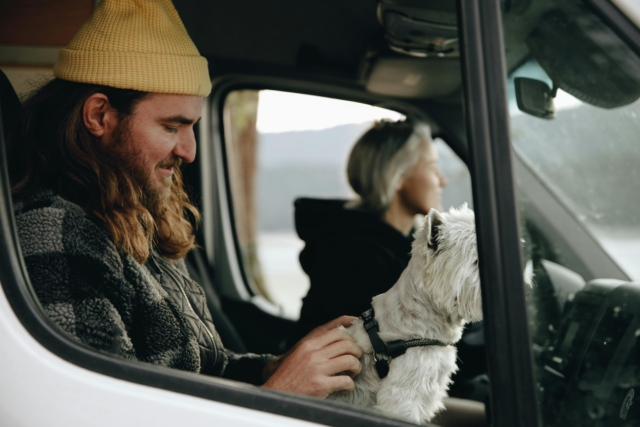
Seatbelts are acceptable restraints for dogs in states and territories that require you to restrain animals in cars. However, you cannot use standard car seatbelts designed for humans because they will not fit dogs properly.
The average pet store sells special restraints designed for dogs. They usually attach to the standard car seatbelts to fit average-sized animals more securely. Always use these unique doggie seatbelts to restrain your dog before driving with them in your car. Do this even in the states and territories where restraining your dog is not required.
5) Try a Crate Restraint for a Large or Small Dog
Unfortunately, the doggie seatbelts sold at pet stores don’t fit all dog sizes. If your dog is too large or small, you may not find a seatbelt that can adequately secure them in their car seat.
A crate is the best alternative restraint solution for a large or small dog. Pet stores sell special pet crates designed for cars and dogs of various sizes. Of course, you must ensure your dog can comfortably fit inside the crate. They need to have enough room to stand, sit, rotate, and lie down. Plus, your car’s backseat has to be big enough to anchor and secure the crate.
It is imperative to anchor the crate to the backseat to prevent it from sliding around as the vehicle is in motion. Failure to do so could risk injury to your dog and legal penalties for you.
6) Store Pet Supplies in Your Car
Long Australian road trips could bring you many miles away from the nearest pet stores or ordinary grocery stores and drug stores. To ensure your dog has all the supplies needed for long trips, you should store the necessary pet supplies in the glove compartment or boot of your car.
Examples of vital doggy supplies include pet treats, poop bags, leashes, collars, food, and water. We recommend keeping these supplies in the front of your car or on an over-the-seat organizer behind the front seats.
7) Distract Your Dog with Toys
Keep plenty of chewable toys in the car to distract your dog as you drive on the road. Since it may be a long trip, you would not want them to get bored because they may try to entertain themselves by chewing the chairs or their restraints. But if they have chewable toys handy, they will entertain themselves with them instead.
Conclusion
There is no national law prohibiting you from driving a car with a dog. Just remember that each state and territory have specific rules regarding how to manage and restrain the dog in your vehicle.
Fortunately, many of these laws are similar if not the same. For instance, most Australian states and territories require you to either keep your dogs restrained or merely off your lap as you drive. To be on the safe side, you should do both to avoid causing unnecessary harm to your dog.
A harmed animal in a car could lead to enormous consequences for the driver, even if the state or territory does not require restraints for the animal. Therefore, you must do everything possible to keep your dog safe to avoid any legal problems.